
2017-04-07 15:34:00 Fri ET
trust perseverance resilience empathy compassion passion purpose vision mission life metaphors seamless integration critical success factors personal finance entrepreneur inspiration grit
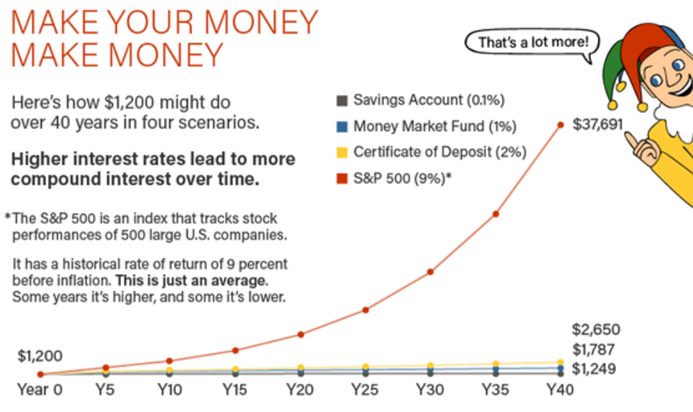
Would you rather receive $1,000 each day for one month or a magic penny that doubles each day over the same month?
At first glance, this counterintuitive question defies the conventional wisdom because compound interest can readily outweigh arithmetic interest over an equivalent time horizon.
Indeed, the magic penny would become $10,737,418, or equivalently 346 times more than $31,000 over the same one-month period.
Successful long-term sustainable value investment focuses on the magic power of compound interest, which Albert Einstein characterizes as the most powerful mathematical tool for exponential growth.
Exponential compound interest is thus the key to unlocking long-run sustainable wealth creation.
Each investor should reinvest his or her disposable income from cash dividend payout and share buyback to yield interest on both principal and interest income.
If any of our AYA Analytica financial health memos (FHM), blog posts, ebooks, newsletters, and notifications etc, or any other form of online content curation, involves potential copyright concerns, please feel free to contact us at service@ayafintech.network so that we can remove relevant content in response to any such request within a reasonable time frame.
2019-10-09 16:46:00 Wednesday ET
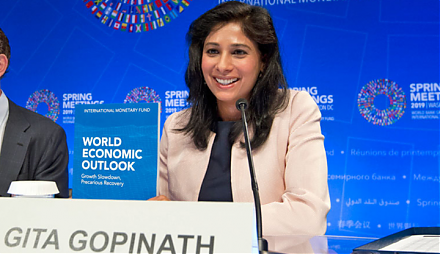
IMF chief economist Gita Gopinath indicates that competitive currency devaluation may be an ineffective solution to improving export prospects. In the form
2020-08-12 07:25:00 Wednesday ET
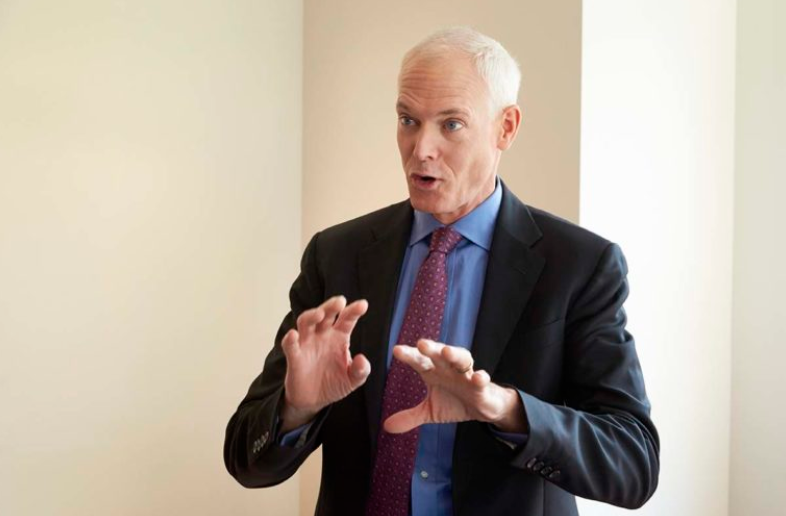
Most sustainably successful business leaders make a mark in the world, create a positive impact, and challenge the status quo. Jerry Porras, Stewart Emer
2023-03-07 11:29:00 Tuesday ET

Former Bank of England Governor Mervyn King provides his deep substantive analysis of the Global Financial Crisis of 2008-2009. Mervyn King (2017) &nb
2023-11-28 11:35:00 Tuesday ET
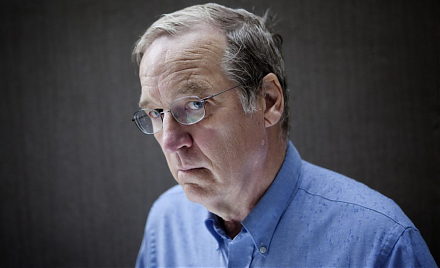
David Colander and Craig Freedman argue that economics went wrong when there was no neoclassical firewall between economic theories and policy reforms. D
2017-11-13 07:42:00 Monday ET

Top 2 wealthiest men Bill Gates and Warren Buffett shared their best business decisions in a 1998 panel discussion with students at the University of Washin
2025-10-05 17:31:00 Sunday ET

Stock Synopsis: With a new Python program, we use, adapt, apply, and leverage each of the mainstream Gemini Gen AI models to conduct this comprehensive fund