2019-08-18 11:33:00 Sun ET
technology antitrust competition bilateral trade free trade fair trade trade agreement trade surplus trade deficit multilateralism neoliberalism world trade organization regulation public utility current account compliance
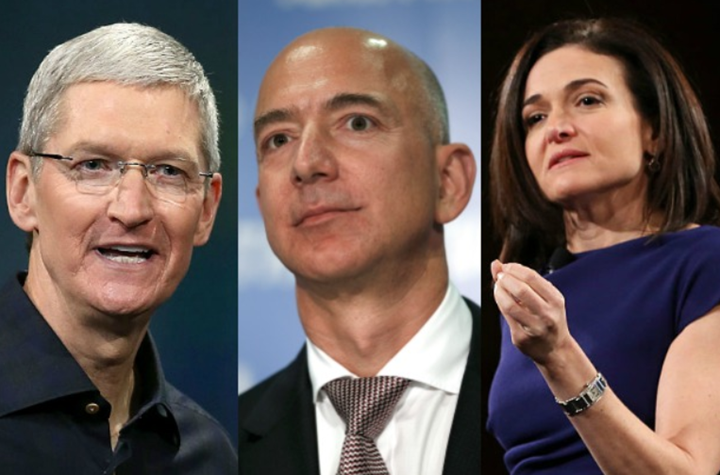
House Judiciary Committee summons senior executive reps of the tech titans to assess online platforms and their market power. These companies are Facebook, Apple, Microsoft, Google, and Amazon (F.A.M.G.A.).
Congressional committee members focus on whether these tech giants abuse their clout to crush their rivals in social media, e-commerce, software, Internet search, and artificial intelligence. Antitrust scrutiny and tech compliance emerge from the sheer size of F.A.M.G.A. and so remain key bipartisan regulatory issues in America. F.A.M.G.A. represent the cumulative $4+ trillion equity valuation or almost 15% of U.S. stock market capitalization, and also amass $180+ billion in pre-tax profits or 10% of pre-tax profits made by U.S. public companies. In recent years, F.A.M.G.A. have spent billions buying rivals to stifle competition. The major merger deals are:
(1) the $20 billion acquisitions of Instagram, WhatsApp, and Oculus by Facebook;
(2) the $15 billion acquisitions of Whole Foods Market and PillPack by Amazon;
(3) the $45 billion acquisitions of LinkedIn, Skype, GitHub, and Nokia by Microsoft;
(4) the $16 billion acquisitions of DeepMind, Motorola, and Nest by Google; and
(5) the $10 billion acquisitions of Semetric Music, Shazam, and Turi etc by Apple.
If any of our AYA Analytica financial health memos (FHM), blog posts, ebooks, newsletters, and notifications etc, or any other form of online content curation, involves potential copyright concerns, please feel free to contact us at service@ayafintech.network so that we can remove relevant content in response to any such request within a reasonable time frame.
2018-03-29 14:28:00 Thursday ET
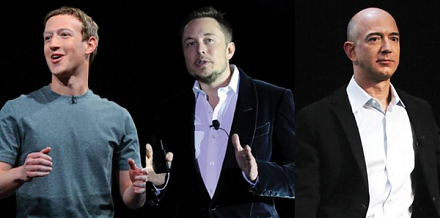
Share prices tumble for technology stocks due to Trump's criticism of Amazon's tax avoidance, Facebook user data breach of trust, and Tesla autopilo
2018-08-27 09:35:00 Monday ET
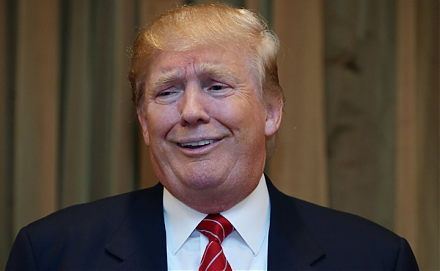
President Trump and his Republican senators and supporters praise the recent economic revival of most American counties. The Economist highlights a trifecta
2019-06-21 13:33:00 Friday ET
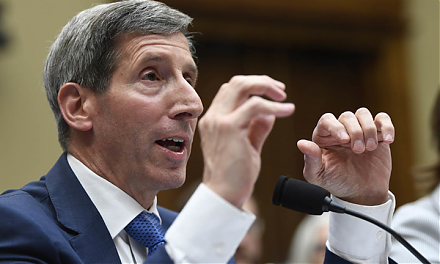
Amazon and Google face more intense antitrust scrutiny. In recent times, Justice Department and Federal Trade Commission have reached an internal agreement
2019-05-15 12:32:00 Wednesday ET
The May administration needs to seek a fresh fallback option for Halloween Brexit. After the House of Commons rejects Brexit proposals from the May administ
2023-05-27 11:30:00 Saturday ET
Bank failure resolution and financial risk management: Silicon Valley Bank, Signature Bank, and First Republic Bank. What are the main root cau
2024-07-31 09:28:00 Wednesday ET
In the modern monetary system, each new CBDC helps anchor public trust in money in support of economic welfare, especially in a cashless society. In our