
2019-11-03 12:30:00 Sun ET
technology antitrust competition bilateral trade free trade fair trade trade agreement trade surplus trade deficit multilateralism neoliberalism world trade organization regulation public utility current account compliance
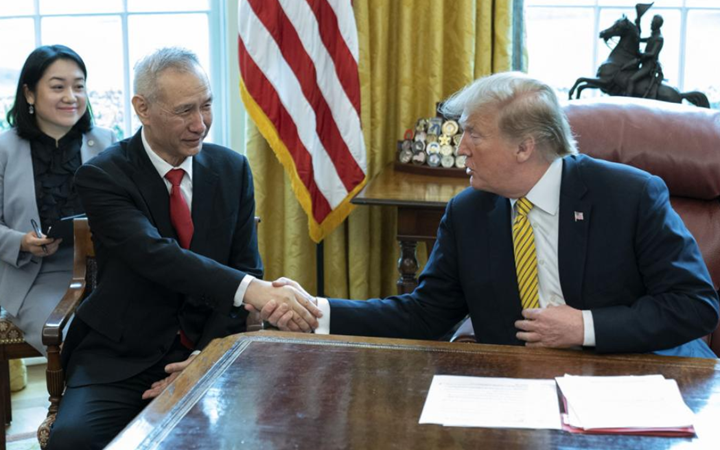
Chinese trade delegation offers to boost purchases of U.S. agricultural products to reach an interim trade deal with the Trump administration. Chinese Vice Premier Liu He indicates an active key interest from China in buying $40 billion to $50 billion American agricultural products such as soybeans and pork bellies. China expects the Trump team to institute another tariff reprieve in light of the interim partial trade agreement. Thus, there would be no 5% tariff hike on top of the current 25% tariffs on $250 billion Chinese goods. China further expects the Trump administration to circumvent blacklisting some Chinese tech titans such as HuaWei and Tencent. In response, however, U.S. trade rep Robert Lighthizer emphasizes that the HuaWei case should be kept separate from the interim partial trade deal.
Chinese trade delegation indicates a key interest in keeping the renminbi currency steady within reasonable ranges of exchange rates. Any new competitive currency manipulation or misalignment would not serve in the best interests of America and China. Moreover, China plans to further open up its asset markets by lifting foreign capital investment restrictions from April 2020 onwards.
On balance, peace and engagement can help attain the best compromise in Sino-American trade negotiations.
If any of our AYA Analytica financial health memos (FHM), blog posts, ebooks, newsletters, and notifications etc, or any other form of online content curation, involves potential copyright concerns, please feel free to contact us at service@ayafintech.network so that we can remove relevant content in response to any such request within a reasonable time frame.
2025-08-02 13:31:00 Saturday ET

Chip Espinoza, Mick Ukleja, and Craig Rusch shine fresh light on the core competences for managing millennials as part of the new modern workforce in recent
2019-11-21 11:34:00 Thursday ET
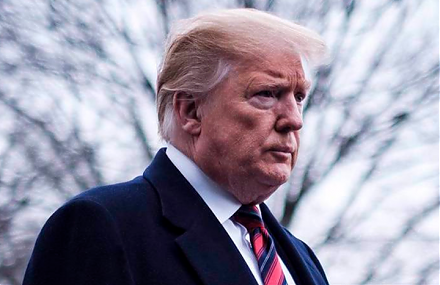
Berkeley macro economist Brad DeLong sees no good reasons for an imminent economic recession with mass unemployment and even depression. The current U.S. ec
2017-11-13 07:42:00 Monday ET
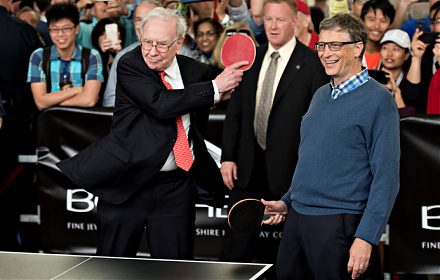
Top 2 wealthiest men Bill Gates and Warren Buffett shared their best business decisions in a 1998 panel discussion with students at the University of Washin
2018-11-09 11:35:00 Friday ET
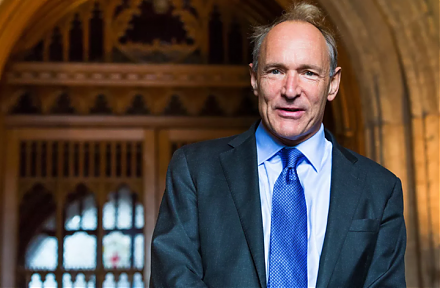
The Internet inventor Tim Berners-Lee suggests that several tech titans might need to be split up in response to some recent data breach and privacy concern
2018-02-07 06:38:00 Wednesday ET
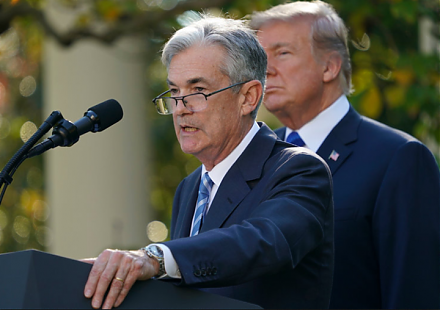
The new Fed chairman Jerome Powell faces a new challenge in the form of both core CPI and CPI inflation rate hikes toward 1.8%-2.1% year-over-year with stro
2019-08-05 13:30:00 Monday ET
China continues to sell U.S. Treasury bonds amid Sino-U.S. trade truce uncertainty. In mid-2019, China reduces its U.S. Treasury bond positions by $20.5 bil