
2018-01-25 08:32:00 Thu ET
stock market gold oil stock return s&p 500 asset market stabilization asset price fluctuations stocks bonds currencies commodities funds term spreads credit spreads fair value spreads asset investments

After its flagship iPhone X launch, Apple reports its highest quarterly sales revenue over $80 billion in the tech titan's 41-year history. Apple expects to distribute to its shareholders $143 billion cash stockpiles in the form of cash dividends and share repurchases. Apple also plans to make $30 billion capital investments in America in the next 5 years. Most of these capital expenditures contribute to opening data centers for iCloud services. Apple expects to create more than 20,000 new jobs at its extant campuses and a new one for technical support.
In fact, Apple is the latest one to announce new cash distributions that arise from the new Trump tax holiday. For the Trump administration and Republican-driven Congress, this legislative victory aims to transform corporate tax credits into better jobs and higher wages. Some companies may instead funnel these tax credits into share buyback and dividend payout in order to side-step U.S. workers. It is hence important for most investors to assess whether these tax cuts can serve as fiscal stimulus for better domestic employment and macroeconomic growth.
In due course, the Trump stock market rally can continue in the medium term only when 3%-3.5% real GDP growth trickles down to benefit the typical U.S. consumer, producer, and financial intermediary.
If any of our AYA Analytica financial health memos (FHM), blog posts, ebooks, newsletters, and notifications etc, or any other form of online content curation, involves potential copyright concerns, please feel free to contact us at service@ayafintech.network so that we can remove relevant content in response to any such request within a reasonable time frame.
2019-05-02 13:30:00 Thursday ET

Netflix has an unsustainable business model in the meantime. Netflix maintains a small premium membership fee of $9-$14 per month for its unique collection
2018-02-19 08:39:00 Monday ET

Snap cannot keep up with the Kardashians because its stock loses market value 7% or $1 billion after Kylie Jenner tweets about her decision to leave Snapcha
2019-05-09 10:28:00 Thursday ET

President Trump ramps up 25% tariffs on $200 billion Chinese imports soon after China backtracks on the Sino-American trade agreement. U.S. trade envoy Robe
2022-02-15 14:41:00 Tuesday ET

Modern themes and insights in behavioral finance Lee, C.M., Shleifer, A., and Thaler, R.H. (1990). Anomalies: closed-end mutual funds. Journal
2019-09-13 10:37:00 Friday ET

China allows its renminbi currency to slide below the key psychologically important threshold of 7-yuan per U.S. dollar. A currency dispute between the U.S.
2017-12-11 08:42:00 Monday ET
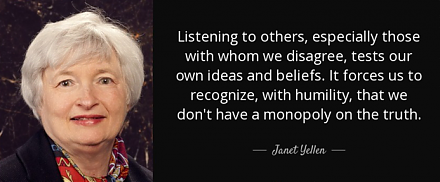
Fed Chair Janet Yellen says the current high stock market valuation does not mean overvaluation. A stock market quick fire sale would pose minimal risk to t