
Home > Personal Investment Vitae
Market capitalization:
$2,388,675talentsVirtual portfolio value:
$2,388,675talentsNet overall return per annum:
13.54%AYA current rank order:
#19Top 10 profitable stock transactions since January 2020Strategy
| Symbol | Company | Buy | Sell | Share Volume | Return (%) | Profit ($) |
|---|---|---|---|---|---|---|
| SMCI | Super Micro Computer Inc. Common Stock | $621.66 | $940.44 | 300 | +51.28% | $95,634 |
| ASML | ASML Holding N.V. New York Registry Shares | $560.79 | $710.24 | 600 | +26.65% | $89,670 |
| AMD | Advanced Micro Devices Inc. Common Stock | $140.15 | $179.62 | 1,500 | +43.60% | $59,205 |
| AMD | Advanced Micro Devices Inc. Common Stock | $140.15 | $180.42 | 1,000 | +44.24% | $40,270 |
| AAPL | Apple Inc. Common Stock | $148.32 | $196.94 | 700 | +32.82% | $34,034 |
| TSM | Taiwan Semiconductor Manufacturing Company Ltd. | $82.46 | $102.12 | 1,500 | +25.18% | $29,490 |
| ASML | ASML Holding N.V. New York Registry Shares | $560.79 | $744.71 | 100 | +32.80% | $18,392 |
| X | United States Steel Corporation Common Stock | $25.70 | $31.25 | 2,000 | +21.60% | $11,100 |
| AAPL | Apple Inc. Common Stock | $148.32 | $197.96 | 200 | +33.50% | $9,928 |
| TSM | Taiwan Semiconductor Manufacturing Company Ltd. | $82.46 | $100.95 | 500 | +23.74% | $9,245 |
| Sum | $396,968 |
Top 10 current stock portfolio positions as of April 2026Strategy
| Symbol | Company | Price | Position | Capitalization |
|---|---|---|---|---|
| MU | Micron Technology Inc. Common Stock | $420.59 | 3,400 | $1,430,006 |
| TSM | Taiwan Semiconductor Manufacturing Company Ltd. | $370.60 | 1,210 | $448,426 |
| MSFT | Microsoft Corporation Common Stock | $370.87 | 700 | $259,609 |
| NVDA | NVIDIA Corporation Common Stock | $188.63 | 790 | $149,017 |
| MRVL | Marvell Technology Inc. Common Stock | $128.49 | 690 | $88,658 |
| MSTR | Strategy Inc Common Stock Class A | $128.64 | 90 | $11,577 |
| Sum | $2,387,293 |
Top 20 investors
Top 20 influencers
2017-07-13 08:35:00 Thursday ET

President Donald Trump has announced that a major Apple iPhone upstream supplier, Foxconn Technology Group (aka Hon Hai Precision Group), will invest $10 bi
2019-08-03 09:28:00 Saturday ET

U.S. inflation has become sustainably less than the 2% policy target in recent years. As Harvard macro economist Robert Barro indicates, U.S. inflation has
2017-11-27 07:39:00 Monday ET

Is it anti-competitive and illegal for passive indexers and mutual funds to place large stock bets in specific industries with high market concentration? Ha
2019-03-13 12:35:00 Wednesday ET
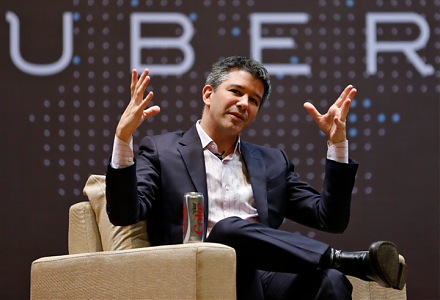
Uber seeks an IPO in close competition with its rideshare rival Lyft and other tech firms such as Slack, Pinterest, and Palantir. Uber expects to complete o
2019-08-28 14:46:00 Wednesday ET

Santa-Barbara political economy professor Benjamin Cohen proposes new fiscal stimulus to complement the current low-interest-rate monetary policy. Cohen fin
2018-07-11 09:39:00 Wednesday ET

In recent times, the Trump administration sees the sweet state of U.S. economic expansion as of early-July 2018. The latest CNBC All-America Economic Survey