
Banco Santander, S.A. is a retail and commercial bank. The Banks segments include Continental Europe, the United Kingdom, Latin America and the United States. The Continental Europe segment covers all businesses in the Continental Europe. The United Kingdom segment includes the businesses developed by various units and branches in the country. The Latin America segment embraces all its financial activities conducted through its banks and subsidiaries in the region. The United States segment includes the Intermediate Holding Company (IHC) and its subsidiaries Santander Bank, Banco Santander Puerto Rico, Santander Consumer USA, Banco Santander International, Santander Investment Securities, and the Santander branch in New York. The Company's commercial model satisfies the needs of all types of customers: individuals with various income levels....
+See MoreSharpe-Lintner-Black CAPM alpha (Premium Members Only) Fama-French (1993) 3-factor alpha (Premium Members Only) Fama-French-Carhart 4-factor alpha (Premium Members Only) Fama-French (2015) 5-factor alpha (Premium Members Only) Fama-French-Carhart 6-factor alpha (Premium Members Only) Dynamic conditional 6-factor alpha (Premium Members Only) Last update: Saturday 17 October 2026
2017-05-01 09:45:00 Monday ET

Apple now pursues an early harvest strategy that focuses on extracting healthy profits from a relatively static market for the Mac, iPhone, and iPad, all of
2019-09-01 10:31:00 Sunday ET

Most artificial intelligence applications cannot figure out the intricate nuances of natural language and facial recognition. These intricate nuances repres
2018-04-05 07:42:00 Thursday ET

CNBC news anchor Becky Quick interviews Berkshire Hathaway's Warren Buffett in light of the recent stock market gyrations and movements. Warren Buffett
2018-06-21 10:42:00 Thursday ET
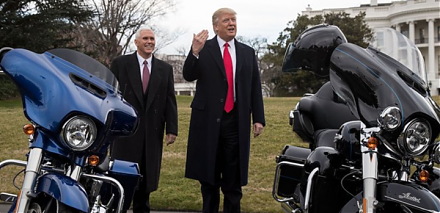
Harley Davidson plans to move its major production for European customers out of America due to European Union tariff retaliation. European Union retaliator
2020-01-08 08:25:00 Wednesday ET
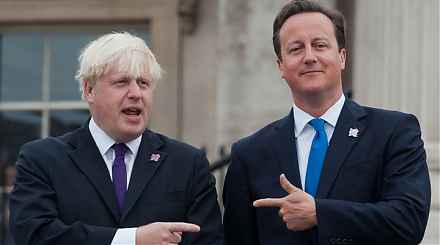
Conservative Party wins the British parliamentary majority in the general election with hefty British pound appreciation. In response to this general electi
2017-04-25 06:35:00 Tuesday ET
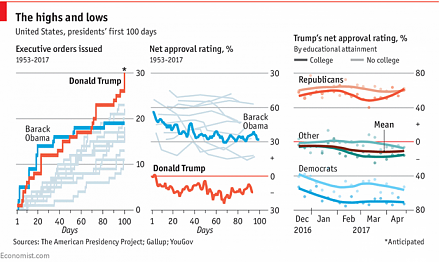
This nice and clear infographic visualization helps us better decipher the main memes and themes of President Donald Trump's first 100 days in office.
 Reports
 Metrics
 Events
 AI Stock Synopses