BioNexus Gene Lab Corp Common stock (NASDAQ:BGLC)

Real-time price: | Most recent change:0.00%

BioNexus Gene Lab Corp. is an emerging company in the business of selling chemical raw materials principally in the Southeast Asia region and the development of biopsy tests for early diagnosis and personalized health management. BioNexus Gene Lab Corp. is based in KUALA LUMPUR, Malaysia....

+See More


Here we provide our AYA proprietary alpha stock signals for all premium members on our AYA fintech network platform. Specifically, a high Fama-French multi-factor dynamic conditional alpha suggests that the stock is likely to consistently outperform the broader stock market benchmarks such as S&P 500, Dow Jones, Nasdaq, Russell 3000, MSCI USA, and MSCI World etc. Since March 2023, our proprietary alpha stock signals retain U.S. Patent and Trademark Office (USPTO) fintech patent protection, approval, and accreditation for 20 years. Our homepage and blog articles provide more details on this proprietary alpha stock market investment model with robust long-term historical backtest evidence.

Sharpe-Lintner-Black CAPM alpha (Premium Members Only) Fama-French (1993) 3-factor alpha (Premium Members Only) Fama-French-Carhart 4-factor alpha (Premium Members Only) Fama-French (2015) 5-factor alpha (Premium Members Only) Fama-French-Carhart 6-factor alpha (Premium Members Only) Dynamic conditional 6-factor alpha (Premium Members Only) Last update: Saturday 7 February 2026

Blog+More

Warren Buffett warns that the current cap ratio of U.S. stock market capitalization to real GDP seems to be much higher than the long-run average benchmark.

James Campbell

2019-08-24 14:38:00 Saturday ET

Warren Buffett warns that the current cap ratio of U.S. stock market capitalization to real GDP seems to be much higher than the long-run average benchmark.

Warren Buffett warns that the current cap ratio of U.S. stock market capitalization to real GDP seems to be much higher than the long-run average benchmark.

+See More

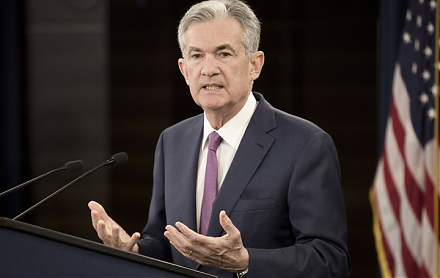
Federal Reserve raises the interest rate to the target range of 2.25% to 2.5% as of December 2018.

Charlene Vos

2018-12-22 14:38:00 Saturday ET

Federal Reserve raises the interest rate to the target range of 2.25% to 2.5% as of December 2018.

Federal Reserve raises the interest rate to the target range of 2.25% to 2.5% as of December 2018. Fed Chair Jerome Powell highlights the dovish interest ra

+See More

Ray Fair applies his macroeconometric model to study the central features of the U.S. macroeconomy such as price stability and full employment in the dual mandate.

Charlene Vos

2023-07-14 10:32:00 Friday ET

Ray Fair applies his macroeconometric model to study the central features of the U.S. macroeconomy such as price stability and full employment in the dual mandate.

Ray Fair applies his macroeconometric model to study the central features of the U.S. macroeconomy such as price stability and full employment in the dual m

+See More

From crony capitalism to state capitalism, what economic policy lessons can we learn from Putin's reign in Russia?

Jonah Whanau

2018-03-13 07:34:00 Tuesday ET

From crony capitalism to state capitalism, what economic policy lessons can we learn from Putin's reign in Russia?

From crony capitalism to state capitalism, what economic policy lessons can we learn from President Putin's current reign in Russia? In the 15 years of

+See More

Stock Synopsis: Video games continue to take both screen time and monetization from many other forms of entertainment.

Becky Berkman

2024-10-14 11:33:00 Monday ET

Stock Synopsis: Video games continue to take both screen time and monetization from many other forms of entertainment.

Stock Synopsis: Video games continue to take both screen time and monetization from many other forms of entertainment. We are broadly positive about the

+See More

The Economist suggests that the world has learned few lessons of the global financial crisis from 2008 to 2009.

Becky Berkman

2018-09-07 07:33:00 Friday ET

The Economist suggests that the world has learned few lessons of the global financial crisis from 2008 to 2009.

The Economist re-evaluates the realistic scenario that the world has learned few lessons of the global financial crisis from 2008 to 2009 over the past deca

+See More