ARYA Sciences Acquisition Corp III Class A Ordinary Shares (NASDAQ:ARYA)

Real-time price: | Most recent change:0.00%

Arya Sciences Acquisition Corp. is a blank check company. It formed for the purpose of effecting a merger, share exchange, asset acquisition, share purchase, reorganization or similar business combination with one or more businesses or entities. Arya Sciences Acquisition Corp. is based in New York, United States....

+See More


Here we provide our AYA proprietary alpha stock signals for all premium members on our AYA fintech network platform. Specifically, a high Fama-French multi-factor dynamic conditional alpha suggests that the stock is likely to consistently outperform the broader stock market benchmarks such as S&P 500, Dow Jones, Nasdaq, Russell 3000, MSCI USA, and MSCI World etc. Since March 2023, our proprietary alpha stock signals retain U.S. Patent and Trademark Office (USPTO) fintech patent protection, approval, and accreditation for 20 years. Our homepage and blog articles provide more details on this proprietary alpha stock market investment model with robust long-term historical backtest evidence.

Sharpe-Lintner-Black CAPM alpha (Premium Members Only) Fama-French (1993) 3-factor alpha (Premium Members Only) Fama-French-Carhart 4-factor alpha (Premium Members Only) Fama-French (2015) 5-factor alpha (Premium Members Only) Fama-French-Carhart 6-factor alpha (Premium Members Only) Dynamic conditional 6-factor alpha (Premium Members Only) Last update: Saturday 18 April 2026

Blog+More

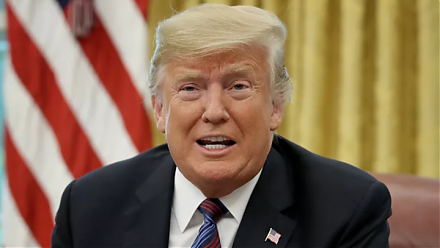
Trump administration imposes 20%-50% tariffs on Turkish imports due to a recent spat over the detention of an American pastor.

Apple Boston

2018-08-11 14:35:00 Saturday ET

Trump administration imposes 20%-50% tariffs on Turkish imports due to a recent spat over the detention of an American pastor.

The Trump administration imposes 20%-50% tariffs on Turkish imports due to a recent spat over the detention of an American pastor, Andrew Brunson, in Turkey

+See More

Most artificial intelligence applications cannot figure out the intricate nuances of natural language and facial recognition.

Fiona Sydney

2019-09-01 10:31:00 Sunday ET

Most artificial intelligence applications cannot figure out the intricate nuances of natural language and facial recognition.

Most artificial intelligence applications cannot figure out the intricate nuances of natural language and facial recognition. These intricate nuances repres

+See More

AYA finbuzz podcast offers fresh insights into the latest stock market issues and economic trends for better and wiser investment decisions.

Daphne Basel

2019-07-31 11:34:00 Wednesday ET

AYA finbuzz podcast offers fresh insights into the latest stock market issues and economic trends for better and wiser investment decisions.

AYA Analytica finbuzz podcast channel on YouTube July 2019 In this podcast, we discuss several topical issues as of July 2019: (1) All 18 systemical

+See More

The Trump team now aims to make progress on health care, infrastructure, social welfare, and immigration.

Monica McNeil

2018-01-06 07:32:00 Saturday ET

The Trump team now aims to make progress on health care, infrastructure, social welfare, and immigration.

Subsequent to the Trump tax cuts for Christmas in December 2017, the one-year-old Trump presidency now aims to make progress on health care, infrastructure,

+See More

Central banks learn to weigh the monetary policy trade-offs between output and inflation expectations and macro-financial stress conditions.

Becky Berkman

2026-01-31 10:31:00 Saturday ET

Central banks learn to weigh the monetary policy trade-offs between output and inflation expectations and macro-financial stress conditions.

  In recent years, several central banks conduct, assess, and discuss the core lessons, rules, and challenges from their monetary policy framework r

+See More

Harvard macrofinance professor Robert Barro sees no good reasons for the recent sudden reversal of U.S. monetary policy normalization.

Laura Hermes

2019-09-09 20:38:00 Monday ET

Harvard macrofinance professor Robert Barro sees no good reasons for the recent sudden reversal of U.S. monetary policy normalization.

Harvard macrofinance professor Robert Barro sees no good reasons for the recent sudden reversal of U.S. monetary policy normalization. As Federal Reserve Ch

+See More