Arrow Financial Corporation Common Stock (NASDAQ:AROW)

Real-time price: | Most recent change:0.00%

Arrow Financial Corporation is registered as a bank holding company. They own two nationally chartered banks, Glens Falls National Bank and Trust Company, and Saratoga National Bank and Trust Company, as well as two non-bank subsidiaries, the operations of which are not significant. They own directly or indirectly all voting stock of all its subsidiaries. The business of the Company consists primarily of the ownership, supervision and control of its bank subsidiaries....

+See More


Here we provide our AYA proprietary alpha stock signals for all premium members on our AYA fintech network platform. Specifically, a high Fama-French multi-factor dynamic conditional alpha suggests that the stock is likely to consistently outperform the broader stock market benchmarks such as S&P 500, Dow Jones, Nasdaq, Russell 3000, MSCI USA, and MSCI World etc. Since March 2023, our proprietary alpha stock signals retain U.S. Patent and Trademark Office (USPTO) fintech patent protection, approval, and accreditation for 20 years. Our homepage and blog articles provide more details on this proprietary alpha stock market investment model with robust long-term historical backtest evidence.

Sharpe-Lintner-Black CAPM alpha (Premium Members Only) Fama-French (1993) 3-factor alpha (Premium Members Only) Fama-French-Carhart 4-factor alpha (Premium Members Only) Fama-French (2015) 5-factor alpha (Premium Members Only) Fama-French-Carhart 6-factor alpha (Premium Members Only) Dynamic conditional 6-factor alpha (Premium Members Only) Last update: Saturday 17 January 2026

Blog+More

Business leaders often think from a systemic perspective, share bold visions, build great teams, and learn new business models.

Becky Berkman

2020-08-05 08:33:00 Wednesday ET

Business leaders often think from a systemic perspective, share bold visions, build great teams, and learn new business models.

Business leaders often think from a systemic perspective, share bold visions, build great teams, and learn new business models. Peter Senge (2006) &nb

+See More

MIT professor and co-author Daron Acemoglu suggests that economic prosperity comes from high-wage job creation.

Fiona Sydney

2019-05-19 19:31:00 Sunday ET

MIT professor and co-author Daron Acemoglu suggests that economic prosperity comes from high-wage job creation.

MIT professor and co-author Daron Acemoglu suggests that economic prosperity comes from high-wage job creation. Progressive tax redistribution cannot achiev

+See More

Macro economic innovations and asset alphas show significant mutual causation.

Olivia London

2023-12-03 11:33:00 Sunday ET

Macro economic innovations and asset alphas show significant mutual causation.

Macro innovations and asset alphas show significant mutual causation. April 2023   This brief article draws from the recent research publicati

+See More

Global economic uncertainty now lurks in a thick layer of mystery.

Jonah Whanau

2019-03-01 13:36:00 Friday ET

Global economic uncertainty now lurks in a thick layer of mystery.

Global economic uncertainty now lurks in a thick layer of mystery. This uncertainty arises from Sino-U.S. trade tension, Brexit fallout, monetary policy nor

+See More

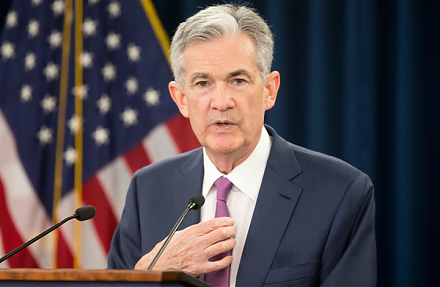
Fed Chair Jerome Powell hints slower interest rate increases because the current rate is just below the neutral threshold.

Jacob Miramar

2018-12-07 11:35:00 Friday ET

Fed Chair Jerome Powell hints slower interest rate increases because the current rate is just below the neutral threshold.

Fed Chair Jerome Powell hints slower interest rate increases because the current rate is just below the neutral threshold. NYSE and NASDAQ share prices rebo

+See More

Agile business firms beat the odds by building faster institutional reflexes to anticipate plausible economic scenarios.

Fiona Sydney

2020-09-03 10:26:00 Thursday ET

Agile business firms beat the odds by building faster institutional reflexes to anticipate plausible economic scenarios.

Agile business firms beat the odds by building faster institutional reflexes to anticipate plausible economic scenarios. Christopher Worley, Thomas Willi

+See More