Acacia Research Corporation (Acacia Tech) Common Stock (NASDAQ:ACTG)

Real-time price: | Most recent change:0.00%

Acacia Research Corporation, through its subsidiaries, develops, acquires, and licenses patented technologies. It assists patent owners with the prosecution and development of their patent portfolios, protection of their patented inventions from unauthorized use, generation of licensing revenue from users of their patented technologies and enforcement against unauthorized users of their patented technologies. Acacia Research Corporation is based in Newport Beach, California....

+See More


Here we provide our AYA proprietary alpha stock signals for all premium members on our AYA fintech network platform. Specifically, a high Fama-French multi-factor dynamic conditional alpha suggests that the stock is likely to consistently outperform the broader stock market benchmarks such as S&P 500, Dow Jones, Nasdaq, Russell 3000, MSCI USA, and MSCI World etc. Since March 2023, our proprietary alpha stock signals retain U.S. Patent and Trademark Office (USPTO) fintech patent protection, approval, and accreditation for 20 years. Our homepage and blog articles provide more details on this proprietary alpha stock market investment model with robust long-term historical backtest evidence.

Sharpe-Lintner-Black CAPM alpha (Premium Members Only) Fama-French (1993) 3-factor alpha (Premium Members Only) Fama-French-Carhart 4-factor alpha (Premium Members Only) Fama-French (2015) 5-factor alpha (Premium Members Only) Fama-French-Carhart 6-factor alpha (Premium Members Only) Dynamic conditional 6-factor alpha (Premium Members Only) Last update: Saturday 4 July 2026

Blog+More

Lucian Bebchuk and Jesse Fried critique that executive pay often cannot help explain the stock return and operational performance of most corporations.

Daisy Harvey

2023-07-28 11:28:00 Friday ET

Lucian Bebchuk and Jesse Fried critique that executive pay often cannot help explain the stock return and operational performance of most corporations.

Lucian Bebchuk and Jesse Fried critique that executive pay often cannot help explain the stock return and operational performance of most U.S. public corpor

+See More

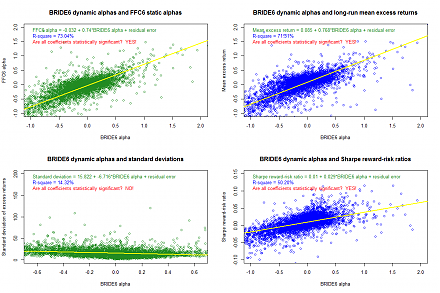
Empirical tests of multi-factor models for asset return prediction

Apple Boston

2022-02-25 00:00:00 Friday ET

Empirical tests of multi-factor models for asset return prediction

Empirical tests of multi-factor models for asset return prediction  The capital asset pricing model (CAPM) of Sharpe (1964), Lintner (1965), and Bla

+See More

U.S. Treasury's proposal for financial deregulation aims to remove key aspects of the Dodd-Frank Act.

Rose Prince

2017-08-25 13:36:00 Friday ET

U.S. Treasury's proposal for financial deregulation aims to remove key aspects of the Dodd-Frank Act.

The U.S. Treasury's June 2017 grand proposal for financial deregulation aims to remove several aspects of the Dodd-Frank Act 2010 such as annual macro s

+See More

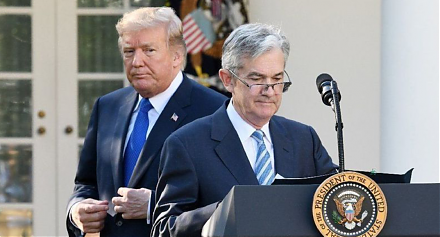
The Economist highlights a trifecta of plausible explanations for better economic fortunes during the current Trump administration.

Chanel Holden

2018-08-27 09:35:00 Monday ET

The Economist highlights a trifecta of plausible explanations for better economic fortunes during the current Trump administration.

President Trump and his Republican senators and supporters praise the recent economic revival of most American counties. The Economist highlights a trifecta

+See More

CEO overconfidence and corporate performance

Laura Hermes

2022-11-05 11:32:00 Saturday ET

CEO overconfidence and corporate performance

CEO overconfidence and corporate performance Malmendier and Tate (JFE 2008, JF 2005) argue that overconfident CEOs are more likely to initiate mergers an

+See More

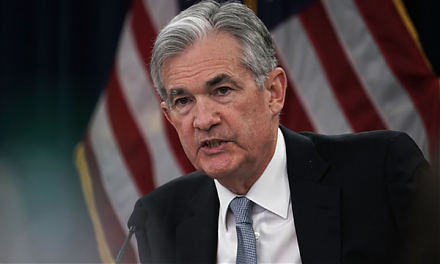
Harvard macrofinance professor Robert Barro sees no good reasons for the recent sudden reversal of U.S. monetary policy normalization.

Laura Hermes

2019-09-09 20:38:00 Monday ET

Harvard macrofinance professor Robert Barro sees no good reasons for the recent sudden reversal of U.S. monetary policy normalization.

Harvard macrofinance professor Robert Barro sees no good reasons for the recent sudden reversal of U.S. monetary policy normalization. As Federal Reserve Ch

+See More