
Manulife Financial Corporation one of the dominant life insurers. Manulife reports earnings through six divisions and has five major operating divisions - Asia, Canada, U.S. Insurance and U.S. Wealth Management and Corporate. The Global Wealth and Asset Management offers a broad range of personal and family-oriented wealth management products and services focused on individuals and business markets. The segment has three core business lines - John Hancock Wealth Asset Management, John Hancock Variable Annuities and John Hancock Fixed Products. Corporate and Other is comprised of the earnings on assets backing capital. The Canadian division offers a diverse portfolio of products, services and distribution channels. The segment also markets life, health and specialty products, such as travel insurance, to consumers through a number of alternative distribution channels. Through Manulife Bank, the segment offers a variety of lending products including fixed and variable rate mortgages....
+See More2023-12-10 09:23:00 Sunday ET

U.S. federalism and domestic institutional arrangements A given country is federal when both of its national and sub-national governments exercise separa
2023-05-31 11:27:00 Wednesday ET

What are the top global risks in trade, finance, and technology? In this macro report, we focus on the current global risks from inflation and growth con
2017-10-27 06:35:00 Friday ET
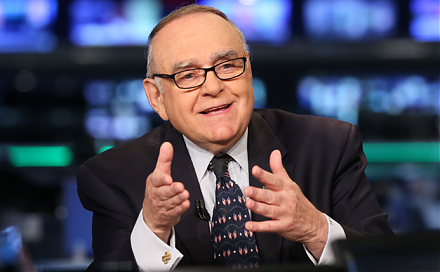
Leon Cooperman, Chairman and CEO of Omega Advisors, points out that the current Trump stock market rally now approaches normalization. The U.S. stock market
2017-05-01 09:45:00 Monday ET

Apple now pursues an early harvest strategy that focuses on extracting healthy profits from a relatively static market for the Mac, iPhone, and iPad, all of
2018-11-30 12:42:00 Friday ET

Andy Yeh Alpha (AYA) AYA Analytica financial health memo (FHM) podcast channel on YouTube November 2018 AYA Analytica is our online regular podcast and news
2019-08-02 17:39:00 Friday ET

The Phillips curve becomes the Phillips cloud with no inexorable trade-off between inflation and unemployment. Stanford finance professor John Cochrane disa