
2017-09-25 09:42:00 Mon ET
technology social safety nets education infrastructure health insurance health care medical care medication vaccine social security pension deposit insurance
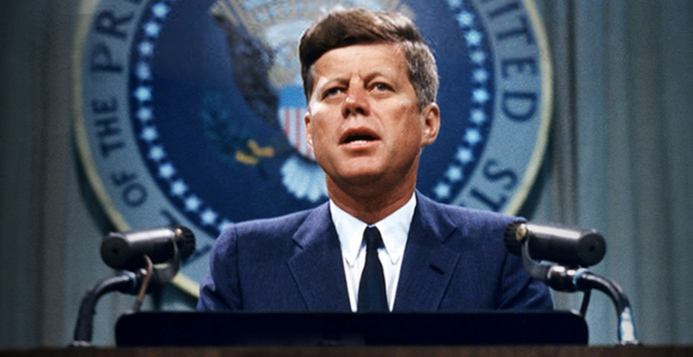
President Trump has allowed most JFK files to be released to the general public. This batch of documents reveals many details of the assassination of President John F. Kennedy by Lee Harvey Oswald in Dallas, Texas, on November 22, 1963. While some records remain secret, mysteries hover around this recent declassification of JFK documents in response to the rampant proliferation of conspiracy theories.
Most of the JFK assassination records remain in the National Archives. Under the 1992 JFK Assassination Records Collection Act, congressional approval of declassification permits President Trump to authorize the legitimate release of additional JFK assassination records.
President Trump, somewhat of a conspiracy theorist himself, opts to maintain the top-secret classification of these JFK files under a pending review up to 180 days. Intelligence agencies such as the FBI and CIA request that the records remain confidential. In recent times, the White House has confirmed this request, and President Trump's recent approval of declassifying JFK files helps assuage the primary concerns of some conspiracy theorists. Overall, this declassification has minimal impact on the current Trump stock market rally although one needs more substantive evidence to demystify the JFK assassination puzzle.
If any of our AYA Analytica financial health memos (FHM), blog posts, ebooks, newsletters, and notifications etc, or any other form of online content curation, involves potential copyright concerns, please feel free to contact us at service@ayafintech.network so that we can remove relevant content in response to any such request within a reasonable time frame.
2018-09-29 12:39:00 Saturday ET
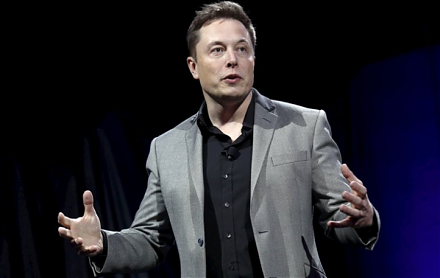
The Securities and Exchange Commission (S.E.C.) sues Elon Musk for his August 2018 tweet that he has secured external finance to convert Tesla into a privat
2019-03-05 10:40:00 Tuesday ET

We may need to reconsider the new rules of personal finance. First, renting a home can be a smart money move, whereas, buying a home cannot always be a good
2026-02-02 12:30:00 Monday ET
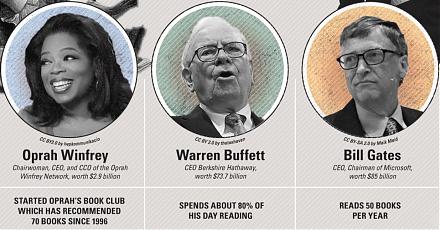
With U.S. fintech patent approval, accreditation, and protection for 20 years, our proprietary alpha investment model outperforms most stock market indexes
2023-03-28 11:30:00 Tuesday ET
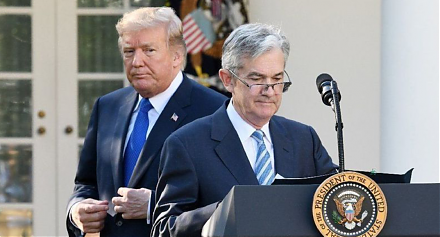
The Federal Reserve System conducts monetary policy decisions, interest rate adjustments, and inter-bank payment operations. Peter Conti-Brown (2017)
2018-11-01 08:36:00 Thursday ET

Ford and Baidu team up to test autonomous cars in China. For the next few years, Ford and Baidu plan to collaborate on the car design and user acceptance te
2022-11-30 09:26:00 Wednesday ET

Climate change and ESG woke capitalism In recent times, the Biden administration has signed into law a $375 billion program to better balance the economi