
2017-06-15 07:32:00 Thu ET
technology antitrust competition bilateral trade free trade fair trade trade agreement trade surplus trade deficit multilateralism neoliberalism world trade organization regulation public utility current account compliance
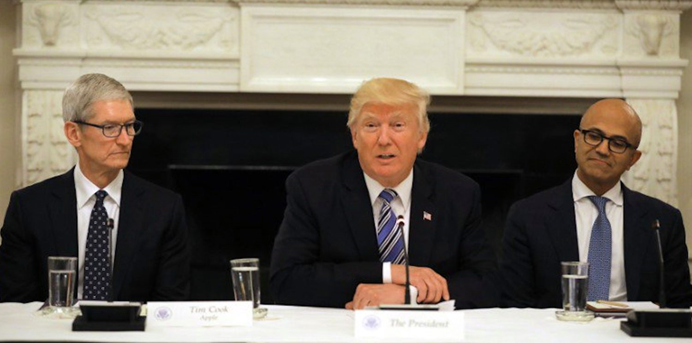
President Donald Trump has discussed with the CEOs of large multinational corporations such as Apple, Microsoft, Google, and Amazon. This discussion includes Apple CEO Tim Cook, Amazon CEO Jeff Bezos, Palantir CEO Alex Karp, and many more. Trump calls for a sweeping transformation of the U.S. government's IT infrastructure to catch up with the private sector.
Apple CEO Tim Cook suggests that the government can embed the essential programming tools and skills in standard school curriculum in order to promote better cybersecurity, encryption, and smart data analysis.
The corporate leaders affirm and welcome the Trump tax incentive plan to boost U.S. economic output, employment, and stock market performance. FAMGA can then repatriate their abundant offshore cash stockpiles to invest in strategic mergers and acquisitions of small tech startups with proprietary technologies to complement FAMGA's extant platforms, networks, and algorithms.
In recent years, we have seen several strategic tech-savvy acquisitions: Apple acquires Anobit and AuthenTec; Amazon acquires Zappos, Kiva Systems, and Whole Foods; Google acquires YouTube, Motorola, and DeepMind; Facebook acquires WhatsApp, Instagram, and Oculus; Microsoft acquires Genee, Skype, LinkedIn, Solair, and Datazen etc. This tech trend continues as FAMGA keeps its dominant position in the markets for mobile technologies, software solutions, and cloud services.
If any of our AYA Analytica financial health memos (FHM), blog posts, ebooks, newsletters, and notifications etc, or any other form of online content curation, involves potential copyright concerns, please feel free to contact us at service@ayafintech.network so that we can remove relevant content in response to any such request within a reasonable time frame.
2019-02-25 12:41:00 Monday ET
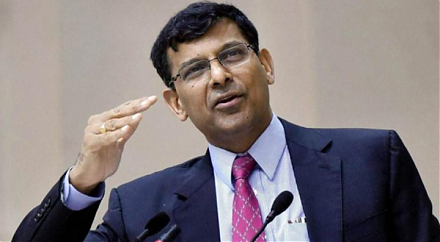
Chicago financial economist Raghuram Rajan views communities as the third pillar of liberal democracy in addition to open markets and states. Rajan suggests
2018-02-07 06:38:00 Wednesday ET
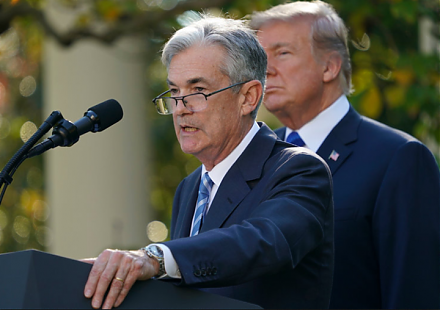
The new Fed chairman Jerome Powell faces a new challenge in the form of both core CPI and CPI inflation rate hikes toward 1.8%-2.1% year-over-year with stro
2019-06-09 11:29:00 Sunday ET
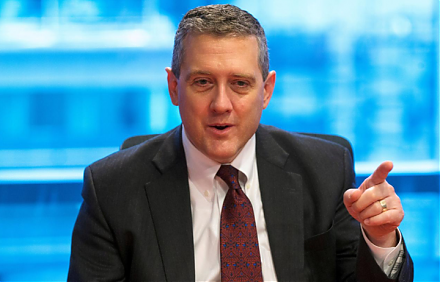
St Louis Federal Reserve President James Bullard indicates that his ideal baseline scenario remains a mutually beneficial China-U.S. trade deal. Bullard ind
2018-01-09 08:33:00 Tuesday ET
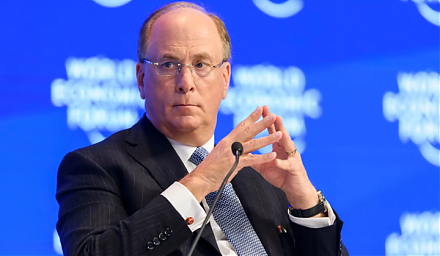
BlackRock CEO Larry Fink emphasizes his key conviction that public corporations should make a positive contribution to society apart from boosting the botto
2018-03-23 08:26:00 Friday ET
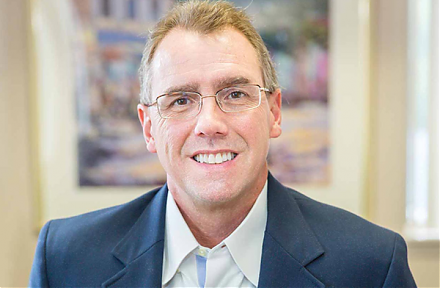
Personal finance and investment author Thomas Corley studies and shares the rich habits of self-made millionaires. Corley has spent 5 years studying the dai
2019-05-03 11:29:00 Friday ET
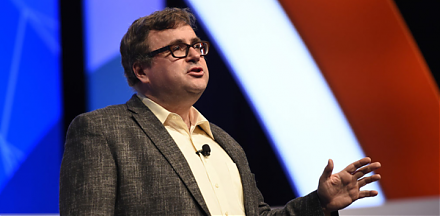
Key tech unicorns blitzscale business niches for better scale economies from Uber and Lyft to Pinterest, Slack, and Zoom. LinkedIn cofounder and serial entr