
2018-04-20 10:38:00 Fri ET
technology antitrust competition bilateral trade free trade fair trade trade agreement trade surplus trade deficit multilateralism neoliberalism world trade organization regulation public utility current account compliance

Allianz chairman Mohamed El-Erian bolsters a new American economic paradigm in lieu of the Washington consensus. The latter dominates the old school of thought prior to the Trump administration. Most key countries would benefit from embracing domestic deregulation and free trade and open cross-border capitalism. When the Washington consensus turns into blind faith, however, America suffers the major discontents of financial globalization such as subprime mortgage risks in the global financial crisis from 2008 to 2009.
Unemployment surges to unforeseen double digits, capital investment wanes, real productivity protracts, and U.S. residents reap lower disposable income. Secular stagnation emerges from the worst-case scenario where the central bank hits the zero lower bound on interest rates to ease labor-market frictions, whereas, higher prices become inadvertent seigniorage taxes. Political polarization further deepens economic income and wealth inequality.
With socioeconomic advantages such as elite education and political clout, the rich become richer as most of their income and wealth would result from cash dividends and capital gains. El-Erian thus proposes his new consensus on fair trade, artificial intelligence, big data, and greater labor mobility. This new consensus better adapts to the current tech titan dominance in both American labor and capital markets.
If any of our AYA Analytica financial health memos (FHM), blog posts, ebooks, newsletters, and notifications etc, or any other form of online content curation, involves potential copyright concerns, please feel free to contact us at service@ayafintech.network so that we can remove relevant content in response to any such request within a reasonable time frame.
2023-05-21 12:26:00 Sunday ET

Amy Chua and Jed Rubenfeld suggest that relatively successful ethnic groups exhibit common cultural traits in America. Amy Chua and Jed Rubenfeld (2015)
2019-01-25 13:34:00 Friday ET
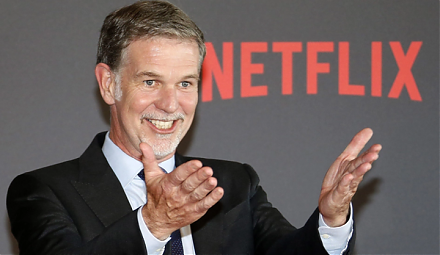
Netflix raises its prices by 13% to 18% for U.S. subscribers. The immediate stock market price soars 6.5% as a result of this upward price adjustment. The b
2023-08-21 12:25:00 Monday ET

Steven Shavell presents his economic analysis of law in terms of the economic outcomes of both legal doctrines and institutions. Steven Shavell (2004)
2023-02-03 08:27:00 Friday ET
Our proprietary alpha investment model outperforms most stock market indices from 2017 to 2023. Our proprietary alpha investment model outperforms the ma
2018-07-11 09:39:00 Wednesday ET

In recent times, the Trump administration sees the sweet state of U.S. economic expansion as of early-July 2018. The latest CNBC All-America Economic Survey
2023-11-30 08:29:00 Thursday ET

In addition to the OECD bank-credit-card model and Chinese online payment platforms, the open-payments gateways of UPI in India and Pix in Brazil have adapt