
Carvana Co. is a leading e-commerce platform for buying and selling used cars. Carvana's end-to-end online business model that covers every aspect of used-car retailing - including sales, financing, logistics, inspection and repair centers, as well as software development - has transformed traditional used-car sales in several ways. With a mission of changing the way people buy cars, Carvana is harnessing the power of digitization and applying it to the auto industry. It is changing customers' shopping experience by letting them find the perfect car from the comfort of homes without having to haggle with sales people. Thanks to advanced technology, customers can browse through its broad inventory of high-quality used cars and get a clear and complete view of the interior and exterior of each car. Once the customers make their selection, the vehicle is either delivered to their home as soon as the next day or available for pick up at a car vending machine....
+See MoreSharpe-Lintner-Black CAPM alpha (Premium Members Only) Fama-French (1993) 3-factor alpha (Premium Members Only) Fama-French-Carhart 4-factor alpha (Premium Members Only) Fama-French (2015) 5-factor alpha (Premium Members Only) Fama-French-Carhart 6-factor alpha (Premium Members Only) Dynamic conditional 6-factor alpha (Premium Members Only) Last update: Saturday 17 October 2026
2019-09-15 14:35:00 Sunday ET
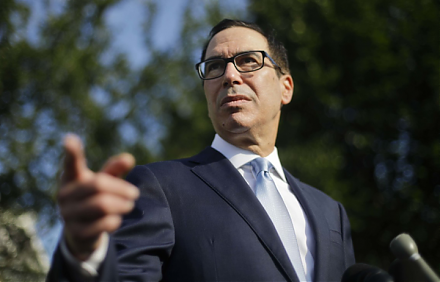
U.S. Treasury officially designates China a key currency manipulator in the broader context of Sino-American trade dispute resolution. The U.S. Treasury cla
2018-09-21 09:41:00 Friday ET

Former World Bank and IMF chief advisor Anne Krueger explains why the Trump administration's current tariff tactics undermine the multilateral global tr
2020-09-11 10:22:00 Friday ET

AYA fintech network platform provides proprietary alpha stock signals and personal finance tools. In recent times, we have completed our fresh website up
2022-11-15 10:30:00 Tuesday ET

Stock market misvaluation and corporate investment payout The behavioral catering theory suggests that stock market misvaluation can have a first-order
2017-12-21 12:45:00 Thursday ET

Tony Robbins summarizes several personal finance and investment lessons for the typical layperson: We cannot beat the stock market very often, so it w
2017-08-13 09:36:00 Sunday ET

Several investors and billionaires such as George Soros, Warren Buffett, Carl Icahn, and Howard Marks suggest that the time may be ripe for a major financia
 Reports
 Metrics
 Events
 AI Stock Synopses