Baker Hughes Company is one of the world's largest oilfield service providers. The integrated oilfield products and digital solutions of Baker Hughes help customers efficiently and cost-effectively refine and transport hydrocarbons with low environmental concerns. Moreover, with growing demand for clean energy and the need to curb greenhouse gas emissions, countries around the world are investing in LNG terminals. This has given Baker Hughes the opportunity to expand its reach beyond oilfields in order to capitalize on contracts for manufacturing equipment that is being used in LNG facilities....
+See MoreSharpe-Lintner-Black CAPM alpha (Premium Members Only) Fama-French (1993) 3-factor alpha (Premium Members Only) Fama-French-Carhart 4-factor alpha (Premium Members Only) Fama-French (2015) 5-factor alpha (Premium Members Only) Fama-French-Carhart 6-factor alpha (Premium Members Only) Dynamic conditional 6-factor alpha (Premium Members Only) Last update: Saturday 17 October 2026
2017-11-23 10:42:00 Thursday ET

As the TV host of Mad Money, Jim Cramer provides 5 key reasons against the purchase and use of cryptocurrencies such as Bitcoin. First, no one knows the ano
2022-03-15 10:32:00 Tuesday ET

Capital structure theory and practice The genesis of modern capital structure theory traces back to the seminal work of Modigliani and Miller (1958
2019-02-15 11:33:00 Friday ET
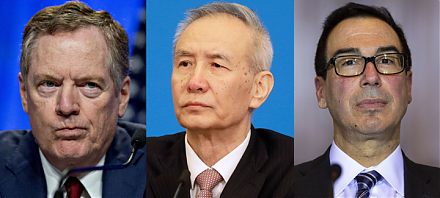
President Trump is open to extending the March 2019 deadline for raising tariffs on Chinese imports if both sides are close to mutual agreement. These bilat
2019-05-13 12:38:00 Monday ET

Brent crude oil prices spike to $70-$75 per barrel after the Trump administration stops waiving economic sanctions on Iranian oil exports. U.S. State Secret
2025-06-13 08:23:00 Friday ET

What are the mainstream legal origins of President Trump’s new tariff policies? We delve into the mainstream legal origins of President Trump&rsquo
2017-07-13 08:35:00 Thursday ET
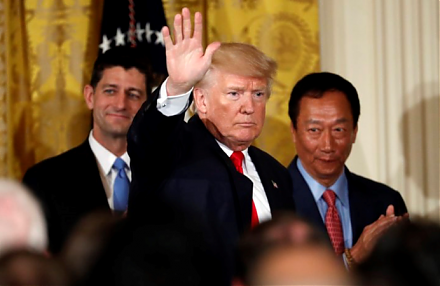
President Donald Trump has announced that a major Apple iPhone upstream supplier, Foxconn Technology Group (aka Hon Hai Precision Group), will invest $10 bi
 Reports
 Metrics
 Events
 AI Stock Synopses