AppTech Payments Corp. Common Stock (NASDAQ:APCX)

Real-time price: | Most recent change:0.00%

AppTech Payments Corp. provides digital financial services for corporations, small and midsized enterprises and consumers through the Company's scalable cloud-based platform architecture and infrastructure. AppTech Payments Corp. is based in CARLSBAD, Calif....

+See More


Here we provide our AYA proprietary alpha stock signals for all premium members on our AYA fintech network platform. Specifically, a high Fama-French multi-factor dynamic conditional alpha suggests that the stock is likely to consistently outperform the broader stock market benchmarks such as S&P 500, Dow Jones, Nasdaq, Russell 3000, MSCI USA, and MSCI World etc. Since March 2023, our proprietary alpha stock signals retain U.S. Patent and Trademark Office (USPTO) fintech patent protection, approval, and accreditation for 20 years. Our homepage and blog articles provide more details on this proprietary alpha stock market investment model with robust long-term historical backtest evidence.

Sharpe-Lintner-Black CAPM alpha (Premium Members Only) Fama-French (1993) 3-factor alpha (Premium Members Only) Fama-French-Carhart 4-factor alpha (Premium Members Only) Fama-French (2015) 5-factor alpha (Premium Members Only) Fama-French-Carhart 6-factor alpha (Premium Members Only) Dynamic conditional 6-factor alpha (Premium Members Only) Last update: Saturday 6 June 2026

Blog+More

U.S. yield curve inversion can be a sign but not a root cause of the next economic recession.

Dan Rochefort

2019-09-19 15:30:00 Thursday ET

U.S. yield curve inversion can be a sign but not a root cause of the next economic recession.

U.S. yield curve inversion can be a sign but not a root cause of the next economic recession. Treasury yield curve inversion helps predict each of the U.S.

+See More

MIT financial economist Simon Johnson rethinks capitalism with better key market incentives.

Daisy Harvey

2019-11-23 08:33:00 Saturday ET

MIT financial economist Simon Johnson rethinks capitalism with better key market incentives.

MIT financial economist Simon Johnson rethinks capitalism with better key market incentives. Johnson refers to the recent Business Roundtable CEO statement

+See More

Steven Shavell presents his economic analysis of law in terms of the economic outcomes of both legal doctrines and institutions.

Jacob Miramar

2023-08-21 12:25:00 Monday ET

Steven Shavell presents his economic analysis of law in terms of the economic outcomes of both legal doctrines and institutions.

Steven Shavell presents his economic analysis of law in terms of the economic outcomes of both legal doctrines and institutions. Steven Shavell (2004)

+See More

President Trump criticizes the WTO and proposes indexing capital gains taxes to inflation for U.S. investors.

Charlene Vos

2018-08-29 10:37:00 Wednesday ET

President Trump criticizes the WTO and proposes indexing capital gains taxes to inflation for U.S. investors.

In an exclusive interview with Bloomberg, President Trump criticizes the World Trade Organization (WTO), proposes indexing capital gains taxes to inflation

+See More

Treasury bond yield curve inversion often signals the next economic recession in America.

Monica McNeil

2018-10-11 08:44:00 Thursday ET

Treasury bond yield curve inversion often signals the next economic recession in America.

Treasury bond yield curve inversion often signals the next economic recession in America. In fact, U.S. bond yield curve inversion correctly predicts the da

+See More

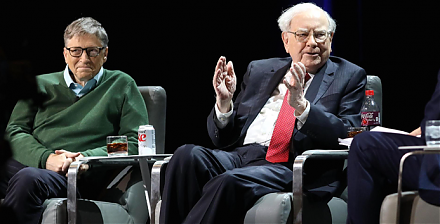
Top 4 U.S. richest people are self-made billionaires: Gates, Buffet, Bloomberg, and Zuckerberg.

Dan Rochefort

2017-08-01 09:40:00 Tuesday ET

Top 4 U.S. richest people are self-made billionaires: Gates, Buffet, Bloomberg, and Zuckerberg.

In American states, all of the Top 4 richest people are self-made billionaires: Bill Gates in Washington, Warren Buffett in Nebraska, Michael Bloomberg in N

+See More