American Assets Trust Inc. Common Stock (NYSE:AAT)

Real-time price: | Most recent change:0.00%

American Assets, Inc. is a real estate investment trust, or REIT, that owns, operates, acquires and develops retail and office properties primarily in Southern California, Northern California and Hawaii. The trusts assets include retail properties, office properties, Waikiki Beach Walk property and multifamily properties. American Assets, Inc. is based in San Diego, California....

+See More


Here we provide our AYA proprietary alpha stock signals for all premium members on our AYA fintech network platform. Specifically, a high Fama-French multi-factor dynamic conditional alpha suggests that the stock is likely to consistently outperform the broader stock market benchmarks such as S&P 500, Dow Jones, Nasdaq, Russell 3000, MSCI USA, and MSCI World etc. Since March 2023, our proprietary alpha stock signals retain U.S. Patent and Trademark Office (USPTO) fintech patent protection, approval, and accreditation for 20 years. Our homepage and blog articles provide more details on this proprietary alpha stock market investment model with robust long-term historical backtest evidence.

Sharpe-Lintner-Black CAPM alpha (Premium Members Only) Fama-French (1993) 3-factor alpha (Premium Members Only) Fama-French-Carhart 4-factor alpha (Premium Members Only) Fama-French (2015) 5-factor alpha (Premium Members Only) Fama-French-Carhart 6-factor alpha (Premium Members Only) Dynamic conditional 6-factor alpha (Premium Members Only) Last update: Saturday 6 June 2026

Blog+More

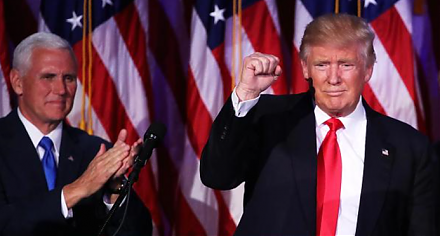
The Economist interviews President Trump and spots the keyword *reciprocity* from trade to taxation.

Amy Hamilton

2017-07-01 08:40:00 Saturday ET

The Economist interviews President Trump and spots the keyword *reciprocity* from trade to taxation.

The Economist interviews President Donald Trump and spots the keyword *reciprocity* in many aspects of Trumponomics from trade and taxation to infrastructur

+See More

We assess how stablecoins and blockchains can combine to strengthen the U.S. Treasury bond market after the recent U.S. congressional passage of the GENIUS Act.

John Fourier

2027-07-31 13:25:00 Saturday ET

We assess how stablecoins and blockchains can combine to strengthen the U.S. Treasury bond market after the recent U.S. congressional passage of the GENIUS Act.

In the broader context of stablecoins for asset tokenization worldwide, many governments now seek to enter the global markets for stablecoins and other U.S.

+See More

Global trade transforms from labor cost arbitrage to high-skill knowledge work.

Laura Hermes

2019-01-29 10:33:00 Tuesday ET

Global trade transforms from labor cost arbitrage to high-skill knowledge work.

Global trade transforms from labor cost arbitrage to high-skill knowledge work. In fact, multinational manufacturers have been trying to create global suppl

+See More

What are the top global risks in trade, finance, and technology as of mid-2023?

Andy Yeh Alpha

2023-05-31 11:27:00 Wednesday ET

What are the top global risks in trade, finance, and technology as of mid-2023?

What are the top global risks in trade, finance, and technology? In this macro report, we focus on the current global risks from inflation and growth con

+See More

Federal Reserve raises the interest rate to the target range of 2.25% to 2.5% as of December 2018.

Charlene Vos

2018-12-22 14:38:00 Saturday ET

Federal Reserve raises the interest rate to the target range of 2.25% to 2.5% as of December 2018.

Federal Reserve raises the interest rate to the target range of 2.25% to 2.5% as of December 2018. Fed Chair Jerome Powell highlights the dovish interest ra

+See More

Peter Schuck analyzes U.S. government failures and structural problems in light of both institutions and incentives.

Dan Rochefort

2023-04-28 16:38:00 Friday ET

Peter Schuck analyzes U.S. government failures and structural problems in light of both institutions and incentives.

Peter Schuck analyzes U.S. government failures and structural problems in light of both institutions and incentives. Peter Schuck (2015)   Why

+See More