
Blackrock New York Municipal Income Trust II is a non-diversified, closed-end municipal bond fund. The Trust's investment objective is to provide current income exempt from regular federal income tax and New York State and New York City personal income taxes. The Trust seeks to achieve its investment objective by investing in municipal bonds exempt from federal income taxes and New York State and New York City personal income taxes. It invests at least 80% of its assets in municipal bonds that are investment grade quality at the time of investment or, if unrated, determined to be of comparable quality by the Trust's investment advisor. It may invest directly in securities or synthetically through the use of derivatives. It invests in various sectors, including county/city/special district/school district, transportation, education, utilities, health, state tax-backed, housing, corporate, local tax-backed and tobacco. BlackRock Advisors, LLC is the investment advisor of the Trust. » Full Overview of BFY ...
+See More2018-05-13 08:33:00 Sunday ET

Incoming New York Fed President John Williams suggests that it is about time to end forward guidance in order to stop holding the financial market's han
2019-08-04 08:26:00 Sunday ET

U.S. and Chinese trade negotiators hold constructive phone talks after Presidents Trump and Xi exchange reconciliatory gestures at the G20 summit in Japan.
2027-01-31 12:25:00 Sunday ET

In recent decades, many governments have chosen to run high fiscal deficits on top of sovereign debt mountains so that greater government intervention still
2023-06-21 12:32:00 Wednesday ET

Michael Sandel analyzes what money cannot buy in stark contrast to the free market ideology of capitalism. Michael Sandel (2013) What money
2019-02-09 08:33:00 Saturday ET

Apple provides positive forward guidance on both revenue and profit forecasts for iPhones, iPads, and MacBooks. In the Christmas 2018 festive season, MacBoo
2019-07-17 12:37:00 Wednesday ET
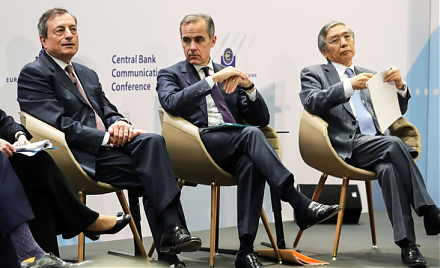
Gold prices surge above $1400 per ounce amid global trade tension and economic policy uncertainty. Both European Central Bank and Bank of Japan may consider