
Bandwidth operates as a Communications Platform-as-a-Service (CPaaS) provider, offering avant-garde software application programming interfaces for voice and messaging services. It is the only API platform provider that owns a Tier 1 network with enhanced network capacity, primarily catering to business enterprises. It delivers unparalleled network quality and proactively monitors network operations 24/7 to resolve quality issues, capitalizing on an efficient cost structure for seamless connectivity and speed-to-market. Technology companies like Microsoft, Cisco and Google leverages Bandwidth's API to embed voice, messaging and 911 access into software & applications. It has 2 units: CPaaS and Other. CPaaS unit leverages cloud-based software platform for superior communications services to deal the huge demand of Unified-Communications-as-a-Service services and Meeting Solutions. It revenues from voice usage & messaging services. Other unit derives revenues primarily from legacy services & indirect revenues....
+See More2023-05-14 12:31:00 Sunday ET

Paul Samuelson defines the mathematical evolution of economic price theory and thereby influences many economists in business cycle theory and macro asset m
2020-04-24 11:33:00 Friday ET

Disruptive innovations tend to contribute to business success in new blue-ocean markets after iterative continuous improvements. Clayton Christensen and
2019-07-15 16:37:00 Monday ET

President of US-China Business Council Craig Allen states that a trade deal should be within reach if Trump and Xi show courage at G20. A landmark trade agr
2025-09-24 09:49:53 Wednesday ET
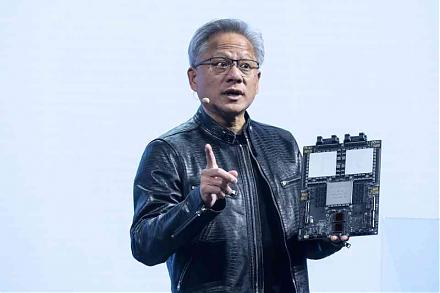
Stock Synopsis: With a new Python program, we use, adapt, apply, and leverage each of the mainstream Gemini Gen AI models to conduct this comprehensive fund
2020-02-26 09:30:00 Wednesday ET

Goldman Sachs follows the timeless business principles and best practices in financial market design and investment management. William Cohan (2011) M
2025-10-06 10:27:00 Monday ET
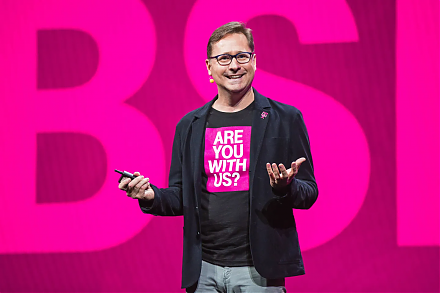
Stock Synopsis: With a new Python program, we use, adapt, apply, and leverage each of the mainstream Gemini Gen AI models to conduct this comprehensive fund