Home > Library > AYA analytic report on the top tech titans (MAMGA) May 2022
Author Peter Prince
Our fintech finbuzz analytic report shines fresh light on the fundamental prospects of U.S. tech titans Meta, Apple, Microsoft, Google, and Amazon (aka M.A.M.G.A.). As of Spring-Summer 2022, this macro report focuses on the global supply chain issues and semiconductor microchip shortages in response to persistent demands of U.S. tech titans. The extant semiconductor microchip demand-supply imbalance remains severe for the U.S. tech and auto industries. It can take several years for the major semiconductor microchip manufacturers to build out new capacity during the current boom-bust business cycle. We expect adequate microchip supplies to meet tech and auto demands in 2023-2024 as the prevalent semiconductor capital investments bear fruit in due course. This macro trend has profound public policy implications for U.S. tech titans Meta, Apple, Microsoft, Google, and Amazon.
Description:
Our fintech finbuzz analytic report shines fresh light on the fundamental prospects of U.S. tech titans Meta, Apple, Microsoft, Google, and Amazon (aka M.A.M.G.A.). As of Spring-Summer 2022, this macro report focuses on the global supply chain issues and semiconductor microchip shortages in response to persistent demands of U.S. tech titans. The extant semiconductor microchip demand-supply imbalance remains severe for the U.S. tech and auto industries. It can take several years for the major semiconductor microchip manufacturers to build out new capacity during the current boom-bust business cycle. We expect adequate microchip supplies to meet tech and auto demands in 2023-2024 as the prevalent semiconductor capital investments bear fruit in due course. This macro trend has profound public policy implications for U.S. tech titans Meta, Apple, Microsoft, Google, and Amazon.
AYA fintech network platform provides proprietary alpha stock signals and personal finance tools for U.S. stock market investors and traders. Our quantitative analysis accords with the standard approach to discounting-cash-flows (DCF) and free-cash-flows (FCF) corporate valuation.
This analytic report cannot constitute any form of financial advice, analyst opinion, recommendation, or endorsement. We refrain from engaging in financial advisory services, and we seek to offer our analytic insights into the latest economic trends, stock market topics, investment memes, and other financial issues. Our proprietary alpha investment algorithmic system helps enrich our AYA fintech network platform as a new social community for stock market investors: https://ayafintech.network.
We share and circulate these informative posts and essays with hyperlinks through our blogs, podcasts, emails, social media channels, and patent specifications. Our goal is to help promote better financial literacy, inclusion, and freedom of the global general public. While we make a conscious effort to optimize our global reach, this optimization retains our current focus on the American stock market.
This analytic report shares new economic insights, investment memes, and stock portfolio strategies through both blog posts and patent specifications on our AYA fintech network platform. AYA fintech network platform is every investor's social toolkit for profitable investment management. We can help empower stock market investors through technology, education, and social integration.
2019-09-23 12:25:00 Monday ET
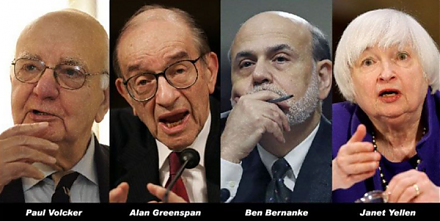
Volcker, Greenspan, Bernanke, and Yellen contribute to a Wall Street Journal op-ed on monetary policy independence. These former Federal Reserve chiefs unit
2025-09-21 12:32:00 Sunday ET
Stock Synopsis: With a new Python program, we use, adapt, apply, and leverage each of the mainstream Gemini Gen AI models to conduct this comprehensive fund
2018-06-17 10:35:00 Sunday ET
In the past decades, capital market liberalization and globalization have combined to connect global financial markets to allow an ocean of money to flow th
2018-10-09 08:40:00 Tuesday ET

The International Monetary Fund (IMF) appoints Harvard professor Gita Gopinath as its chief economist. Gopinath follows her PhD advisor and trailblazer Kenn
2019-01-03 10:38:00 Thursday ET

American parents often worry about money and upward mobility for their children. A recent New York Times survey suggests that nowadays American parents spen
2019-07-19 18:40:00 Friday ET
We can decipher valuable lessons from the annual letters to shareholders written by Amazon CEO Jeff Bezos. Amazon is highly customer-centric because the wor