
2018-05-05 07:33:00 Sat ET
trust perseverance resilience empathy compassion passion purpose vision mission life metaphors seamless integration critical success factors personal finance entrepreneur inspiration grit

Warren Buffett shares his fresh economic insights and value investment strategies at the Berkshire Hathaway shareholder forum in May 2018 despite the new GAAP accounting rule that has led to a $1.14 billion net loss for the Buffett-Munger stock portfolio. Berkshire reports a $1.14 billion loss in 2018Q1 or its first net loss since 2009 due to an esoteric GAAP accounting rule that Buffett considers a nightmare. The firm also reports an operating profit of 48.7% year-over-year. The new GAAP rule suggests that the change in investment gains and losses must be shown in all net income figures. This requirement produces some wild and capricious gyrations in the GAAP bottom-line.
Berkshire owns $170 billion tradable stocks, and the market values of these stock positions can easily fluctuate by $10 billion or more within each quarter. Including gyrations of such magnitude in net income swamps the more important numbers that better describe Berkshire Hathaway's true operating performance. Buffett thus pierces the key GAAP veil for Berkshire investors to better assess the fundamental intrinsic value of each stock position. Buffett continues his active interest in small-to-mid-cap profitable value stocks that inject capital conservatively in both capital equipment and balance sheet expansion.
If any of our AYA Analytica financial health memos (FHM), blog posts, ebooks, newsletters, and notifications etc, or any other form of online content curation, involves potential copyright concerns, please feel free to contact us at service@ayafintech.network so that we can remove relevant content in response to any such request within a reasonable time frame.
2018-03-09 08:33:00 Friday ET
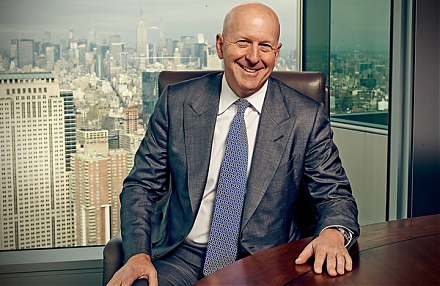
David Solomon succeeds Lloyd Blankfein as the new CEO of Goldman Sachs. Unlike his predecessors Lloyd Blankfein and Gary Cohn, Solomon has been an investmen
2018-10-09 08:40:00 Tuesday ET

The International Monetary Fund (IMF) appoints Harvard professor Gita Gopinath as its chief economist. Gopinath follows her PhD advisor and trailblazer Kenn
2018-05-04 06:29:00 Friday ET
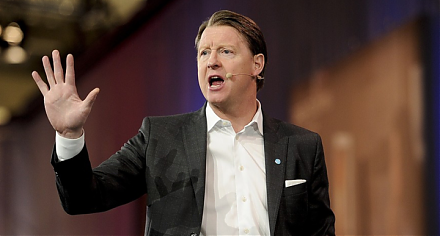
Commerce Secretary Wilbur Ross suggests that 5G remains a U.S. top technology priority in light of the telecom merger proposal between Sprint and T-Mobile a
2023-03-07 11:29:00 Tuesday ET

Former Bank of England Governor Mervyn King provides his deep substantive analysis of the Global Financial Crisis of 2008-2009. Mervyn King (2017) &nb
2020-05-21 11:30:00 Thursday ET

Most blue-ocean strategists shift fundamental focus from current competitors to alternative non-customers with new market space. W. Chan Kim and Renee Ma
2023-02-21 08:27:00 Tuesday ET

Mark Granovetter follows the key principles of modern economic sociology to analyze social relations and economic phenomena. Mark Granovetter (2017) &